Hormonal Belly Fat in Women: Causes, Signs & How to Lose It Naturally


hormonal belly fat in women is different from regular weight gain — and that difference is exactly why standard dieting almost always fails to move it. You cut calories. You exercise more. The scale barely shifts, and the fat around your midsection stays firmly in place.
If this sounds familiar, the problem is not your willpower. Research suggests that for women over 35, shifting hormones actively redirect fat storage toward the abdomen — independently of how many calories you eat. Estrogen drops. Cortisol rises. insulin sensitivity declines. Each of these changes sends a signal to your body to store fat in the abdominal region and resist releasing it.
Understanding why this happens is the first step toward actually fixing it.
Quick Answer — What Is Hormonal Belly Fat in Women?
Hormonal belly fat in women is primarily caused by estrogen decline, high cortisol, and insulin resistance — three hormonal shifts that redirect fat storage toward the abdomen and make it resistant to standard dieting.
It typically appears or worsens in women over 35, often during perimenopause, high-stress life phases, or after sudden hormonal changes. Correcting the underlying hormonal drivers through targeted nutrition, resistance training, sleep, and stress management may help improve results where calorie restriction alone has not worked.
👉 Want to know your personal risk level? Use the Hormonal Belly Fat Risk Calculator — it identifies your key hormonal drivers in under 3 minutes.
🚀 Start Here — New to This Topic?
If you are just beginning to explore hormonal belly fat, start with these three resources first:
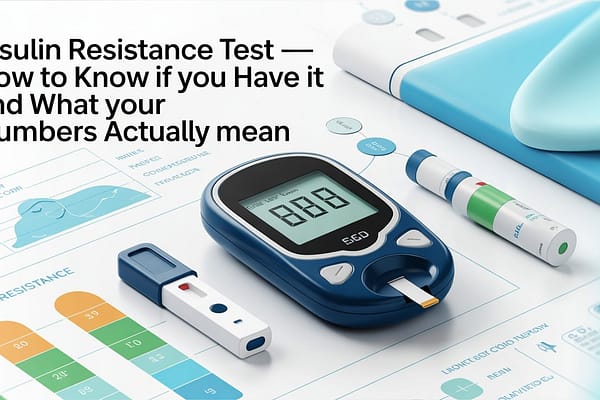
- Insulin Resistance Quiz — Find out if insulin resistance is driving your belly fat
- Metabolism Age Calculator — See how your metabolism compares to your age group
- Hormonal Belly Fat Risk Calculator — Get your personalized hormonal risk score
Once you know your starting point, everything in this guide will make more sense.
⚡ Quick Reference Box
| Factor | Detail |
|---|---|
| Primary hormones involved | Estrogen, cortisol, insulin, thyroid, progesterone |
| Who it affects most | Women 35–55, especially in perimenopause or chronic high-stress phases |
| Why standard dieting struggles | Caloric restriction may raise cortisol, which research links to abdominal fat storage |
| Key warning sign | Waist circumference above 35 inches signals visceral fat accumulation (NIH) |
| Estimated reversal timeframe | 8–16 weeks of consistent hormonal-targeted lifestyle changes |
| Best first tools | Hormonal belly fat risk assessment, TDEE calculation, insulin resistance quiz |
What Makes Hormonal Belly Fat Different?
Not all abdominal fat is the same. Regular subcutaneous fat sits just under the skin — you can pinch it. Hormonal belly fat is predominantly visceral — it surrounds the liver, pancreas, and intestines, deep inside the abdominal cavity.
Visceral fat is metabolically active in harmful ways. Studies show it produces inflammatory proteins called cytokines — including TNF-alpha and interleukin-6 — that may worsen insulin resistance, raise cardiovascular risk, and disrupt further hormonal function.
This is why hormonal belly fat feels different from fat elsewhere:
- It sits low and forward on the abdomen
- It often appears relatively quickly — over months, not years
- It does not respond the way hip or thigh fat does to exercise or calorie cuts
- It tends to worsen during perimenopause even without dietary changes
That is not a perception problem. The biology is genuinely different — and it requires a different approach.
What Causes Hormonal Belly Fat in Women?
1. Estrogen Decline
Estrogen actively directs fat storage toward the hips, thighs, and buttocks in premenopausal women — a protective pattern that keeps fat away from the organs. When estrogen levels begin declining in perimenopause, this protective redirection fades.
Research published in Menopause (PMC) suggests that postmenopausal women show significantly greater visceral fat accumulation than premenopausal women at the same BMI and activity level. The primary variable that changed was estrogen.
This shift may begin in the early 40s — years before the last menstrual period arrives. For a deeper look at how this connects to weight gain: Perimenopause Weight Gain After 40 — Why It Happens.
2. Elevated Cortisol (Chronic Stress)
Cortisol is the body’s primary stress hormone. In short bursts, it is essential. The problem arises with chronic elevation.
Studies suggest that chronically high cortisol may activate glucocorticoid receptors concentrated in visceral fat tissue — increasing fat cell size and promoting fat storage specifically in the abdomen. Cortisol also triggers cravings for high-sugar, high-fat foods, which may worsen insulin resistance further.
👉 Check your cortisol burden: Use the Cortisol Load Calculator to see how much your stress levels may be contributing to abdominal fat storage.
The full cortisol-to-belly-fat connection is explained here: Does Stress Cause Water Retention and Weight Gain in Women?
3. Insulin Resistance
When cells stop responding properly to insulin, the pancreas produces more. Research suggests that elevated insulin is one of the most significant fat-storage signals in the body — and it may direct fat preferentially to visceral abdominal depots.
Visceral fat then releases inflammatory proteins that may worsen insulin resistance, which drives more visceral fat storage. Breaking this cycle often requires addressing insulin sensitivity directly — not just calories.
For the complete picture: Insulin Resistance in Women — Symptoms, Causes & Reversal Guide.
4. Thyroid Dysfunction
The thyroid regulates the metabolic rate of every cell in the body. Even subclinical hypothyroidism — thyroid function within standard reference range but operating below optimal — may slow metabolism, promote fluid retention, and reduce the body’s ability to mobilize stored fat.
The American Thyroid Association estimates that 1 in 8 American women develops a thyroid condition during her lifetime. Belly fat appearing alongside persistent fatigue, cold sensitivity, constipation, and hair thinning warrants a full thyroid panel — including TSH, free T3, and free T4.
Explore thyroid-specific assessment tools at the Hormone and Thyroid Tools Hub.
5. Progesterone Decline
Progesterone has a natural anti-inflammatory effect and helps counterbalance some estrogen-related fat storage signals. As progesterone declines faster than estrogen in perimenopause — a phase sometimes called estrogen dominance — bloating, water retention, and abdominal weight gain may all worsen.
This is often a ratio problem, not just a level problem. The relative balance between hormones matters as much as their absolute values.
Signs and Symptoms of Hormonal Belly Fat
Recognizing the hormonal pattern may help distinguish this type of belly fat from general weight gain — and point toward the right interventions:
Physical Signs:
- Lower abdominal prominence that does not match fat levels elsewhere on the body
- Belly fat that appeared or accelerated without major changes in diet or activity
- Waist circumference above 35 inches (NIH threshold for visceral fat risk)
- Skin tags on the neck or underarms (a possible marker of elevated insulin)
- Dark skin patches on the neck or underarms (acanthosis nigricans)
Hormonal and Metabolic Signs:
- Bloating that tends to worsen in the second half of the menstrual cycle
- Intense carbohydrate and sugar cravings, especially in the afternoon
- Fatigue that does not fully resolve with rest
- Irregular menstrual cycles or worsening PMS alongside new belly fat
- Sleep that feels non-restorative despite adequate hours
Mood and Cognitive Signs:
- Mood changes and new or worsening anxiety
- Afternoon brain fog or poor concentration after meals
- Increased irritability in the week before a period
For a complete breakdown of how each sign presents: Hormonal Belly Fat Symptoms in Women — Root Cause Guide.
What Is Happening in Your Body — Simplified
Think of your hormonal system as a communication network. Every hormone carries a specific instruction to specific cells. When the network runs cleanly, fat storage and fat burning stay in appropriate balance.
In hormonal belly fat, research suggests three key conversations go wrong simultaneously:
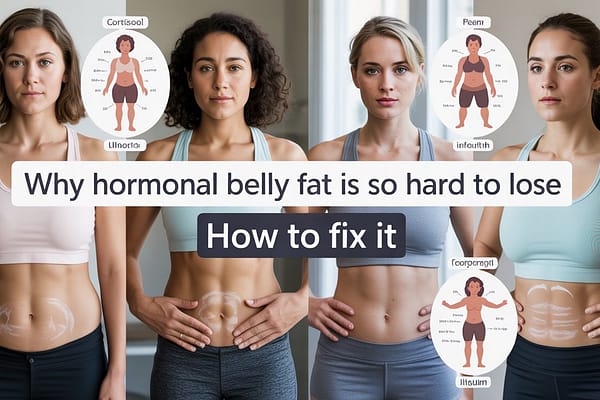
Signal 1 — Estrogen to fat cells: Estrogen normally signals hip and thigh fat cells to accept storage and tells abdominal fat cells to stay lean. When estrogen drops, abdominal fat cells may lose that restraint.
Signal 2 — Cortisol to the liver: Chronically elevated cortisol may signal the liver to produce glucose even when blood sugar is already adequate, and trigger aldosterone production — promoting sodium retention, water retention, and abdominal fat accumulation.
Signal 3 — Insulin to muscle and fat cells: When muscle cells develop insulin resistance, glucose cannot enter them efficiently. Excess glucose may then route to visceral fat cells, which research suggests remain highly insulin-sensitive even when muscle cells have become resistant.
These three signals may operate simultaneously in women experiencing hormonal belly fat. Addressing only one — typically calories — may produce limited results because the other two signals continue. This is why a hormonal approach tends to work where standard dieting does not.
To understand how these hormones affect your overall metabolism: How Hormones Affect Metabolism — The Complete Guide for Women Over 35.
9 Evidence-Based Steps to Lose Hormonal Belly Fat Naturally
👉 Before you start: Use the TDEE Calculator to establish your calorie baseline — the foundation for everything below.
Step 1 — Build Muscle with Resistance Training
According to experts, resistance training is among the most well-supported interventions for hormonal belly fat. Skeletal muscle is the body’s primary glucose disposal system. Building more of it may help restore insulin sensitivity and reduce visceral fat — independently of caloric restriction.
Research published in Obesity (PubMed) suggests that resistance training three times per week may produce measurable visceral fat reduction within 8–12 weeks in women over 40. Cardio alone may not produce the same hormonal recalibration.
Action step: Aim for 3 resistance sessions per week targeting all major muscle groups. Bodyweight exercises count — squats, lunges, push-ups, and rows all qualify.
For the best exercise approach for perimenopausal women: Best Exercises to Boost Metabolism in Perimenopausal Women.
Step 2 — Reduce Refined Carbohydrates Strategically
Refined carbohydrates — white bread, pasta, pastries, sugary drinks — produce rapid glucose and insulin spikes. Research suggests that consistently elevated insulin may be one of the more direct drivers of visceral fat accumulation.
This does not mean eliminating all carbohydrates. Fiber-rich carbohydrates — vegetables, legumes, berries — slow glucose absorption and may support estrogen metabolism. The target is replacing high-glycemic refined carbohydrates with high-fiber whole-food alternatives.
Action step: Swap one refined carbohydrate per day with a fiber-rich alternative for the first two weeks. Build from there.
Step 3 — Prioritize Protein at Every Meal
Protein may help reduce post-meal glucose spikes, preserve muscle mass during caloric deficits, and support satiety hormones including GLP-1 and peptide YY — hormones that may counteract hunger amplification from cortisol and insulin dysregulation.
Action step: Target 25–35 grams of protein per meal. Examples: 4 oz salmon + eggs, Greek yogurt + nuts, or chicken + legumes.
Step 4 — Manage Cortisol Consistently
Research suggests cortisol management may be particularly important for hormonal belly fat — cortisol is thought to directly activate visceral fat storage receptors. Dietary improvement alone may not fully compensate for chronically elevated cortisol.
Practical daily strategies with clinical support:
- 10 minutes of slow diaphragmatic breathing (may reduce salivary cortisol measurably)
- Consistent sleep and wake times
- Reducing evening screen exposure
- 20 minutes of low-stimulation activity — walking outdoors, reading, or stretching
Action step: Pick one cortisol strategy and do it daily for 14 days before adding more.
Step 5 — Prioritize Sleep Above Everything Else
Research suggests poor sleep may elevate cortisol, suppress growth hormone, reduce insulin sensitivity, and amplify hunger hormones simultaneously. Studies published in Annals of Internal Medicine (PubMed) indicate that even one week of poor sleep may produce meaningful insulin sensitivity reductions.
Every other intervention in this list may produce stronger results on a foundation of 7–9 hours of consistent sleep.
Action step: Assess where your sleep is failing using the Sleep Quality Score Tool — then address the top issue first.
Step 6 — Cycle-Sync Your Nutrition
Women’s caloric needs and carbohydrate tolerance may shift significantly across menstrual cycle phases. Research suggests eating the same foods in the same amounts every day may ignore a hormonal reality that changes week to week.
- Follicular phase (days 1–14): Insulin sensitivity tends to be higher; the body may tolerate carbohydrates better
- Luteal phase (days 15–28): Insulin sensitivity often decreases; higher protein and healthy fat with fewer refined carbohydrates may produce better outcomes
👉 The Cycle-Synced TDEE Calculator generates phase-specific calorie and macronutrient targets week by week — something standard calculators do not offer.
Step 7 — Support Estrogen Metabolism Through Food
Even when estrogen production is declining, supporting the liver’s ability to process and excrete estrogen metabolites may help prevent recirculation — a pattern that may worsen estrogen dominance symptoms and promote fat storage.
Cruciferous vegetables — broccoli, Brussels sprouts, cauliflower, cabbage — contain indole-3-carbinol (I3C), a compound that research suggests may support estrogen detoxification in the liver. Including 1–2 servings daily is one of the more targeted nutritional approaches for hormonally-driven abdominal fat.
Action step: Add one serving of cruciferous vegetables to lunch or dinner daily.
Step 8 — Address Vitamin D and Magnesium
Both nutrients are directly involved in insulin receptor function and cortisol regulation — yet studies suggest both are chronically low in American women.
- NIH data indicates approximately 42% of American adults are vitamin D deficient
- An estimated 48% of Americans may be magnesium deficient (NIH), which research links to worsened insulin sensitivity, elevated cortisol reactivity, and disrupted sleep
Action step: Request both on your next blood panel. Supplement only under physician guidance based on your actual levels.
Step 9 — Try Time-Restricted Eating
Research suggests that compressing meals into an 8–10 hour eating window may lower fasting insulin and allow fat mobilization during the overnight fast — without requiring aggressive calorie restriction that could raise cortisol.
A note for perimenopausal women: Fasting windows below 8 hours may raise cortisol and worsen symptoms in some women. Start with a 10-hour window and adjust based on energy and how you feel.
👉 Use the Intermittent Fasting Calculator to find the right eating window for your schedule and hormonal phase.
Best Foods for Hormonal Belly Fat
These foods target the specific hormonal mechanisms most commonly driving abdominal fat accumulation in women over 35:
| Food | Why It Helps |
|---|---|
| Broccoli, Brussels sprouts, cauliflower | DIM and I3C may support estrogen detoxification |
| Fatty fish (salmon, sardines, mackerel) | Omega-3s may reduce visceral inflammation and cortisol reactivity |
| Berries (blueberries, raspberries) | Polyphenols may improve insulin receptor sensitivity |
| Lentils and chickpeas | High fiber + plant protein; low glycemic index |
| Eggs | Complete protein with negligible glycemic impact |
| Avocados | Monounsaturated fats linked to visceral fat reduction |
| Plain Greek yogurt (unsweetened) | Whey protein activates GLP-1; probiotics support gut-estrogen axis |
| Leafy greens | Magnesium-rich; may support insulin receptor function |
| Green tea | EGCG may have visceral fat-reducing effects (per Obesity, PubMed) |
| Walnuts and almonds | May slow glucose absorption and reduce inflammatory markers |
For a complete dietary strategy: Best Diet for Hormonal Belly Fat — Foods, Meal Plan & Root Cause Strategy.
Also see: 17 Foods That Boost Metabolism in Women Over 35.
Foods That May Worsen Hormonal Belly Fat
- Refined carbohydrates — white bread, white rice, standard pasta; may produce rapid insulin spikes
- Sugary drinks and fruit juice — liquid sugar bypasses satiety signaling and produces immediate insulin surges
- Alcohol — may suppress fat oxidation for hours post-consumption and elevate cortisol
- Ultra-processed snack foods — often high in inflammatory vegetable oils and sodium; low in fiber
- Sweetened flavored yogurts — commonly contain 15–25 grams of added sugar per serving despite healthy marketing
- Large amounts of soy — phytoestrogens in excess may affect estrogen receptor signaling in hormonally sensitive women; moderate whole-food soy (edamame, tofu) is generally considered acceptable
Common Mistakes Women Make
❌ Eating too little Severe caloric restriction may raise cortisol — the same hormone that drives visceral fat storage. A modest 20–25% caloric deficit tends to be more productive than aggressive restriction.
👉 Use the TDEE Calculator to find a deficit that supports fat loss without triggering a cortisol response. Then check your Weight Loss Predictor Calculator to set realistic timelines.
❌ Doing only cardio Cardio burns calories but may not build the muscle mass needed to restore insulin sensitivity. Research suggests women who add resistance training alongside cardio may produce greater visceral fat reduction than those doing cardio alone.
❌ Ignoring sleep Sleep is when cortisol falls, growth hormone rises, and insulin sensitivity may reset overnight. Prioritizing diet and exercise while neglecting sleep may undermine the metabolic foundation both depend on.
❌ Treating it as a calorie problem only Two women eating identical calories with different cortisol levels, estrogen profiles, and sleep quality may produce dramatically different fat distribution outcomes. The hormonal environment shapes what the body does with the calories it receives.
❌ Not testing the right biomarkers Most standard annual panels test fasting glucose, not fasting insulin. They test TSH, not free T3 and T4. Treating hormonal belly fat without knowing your hormonal baseline may mean addressing the wrong drivers. Request a panel that includes fasting insulin, HOMA-IR, full thyroid markers, and sex hormone levels.
Key Takeaways
- Hormonal belly fat is primarily driven by estrogen decline, elevated cortisol, and insulin resistance — not simply excess calories
- Visceral fat surrounding the organs produces inflammatory proteins that may worsen every hormonal driver, creating a self-reinforcing cycle
- Research suggests caloric restriction alone may be insufficient because it can raise cortisol — a primary driver of visceral fat storage
- Resistance training, targeted nutrition, sleep optimization, and cortisol management address the actual hormonal mechanisms
- Waist circumference above 35 inches signals clinically relevant visceral fat accumulation regardless of total body weight (NIH)
- Cruciferous vegetables, fatty fish, berries, and high-fiber legumes specifically target the estrogen metabolism and insulin sensitivity pathways
- Cycle-syncing nutrition to hormonal phases may produce better outcomes than fixed daily eating patterns
Frequently Asked Questions
Can hormonal belly fat be lost without medication? Research suggests that the majority of women with hormonally-driven abdominal fat may produce meaningful results through lifestyle intervention alone. Resistance training, refined carbohydrate reduction, cortisol management, and sleep optimization address the primary hormonal mechanisms. Medication — including hormone replacement therapy or metformin for insulin resistance — may accelerate results for some women, but lifestyle change forms the foundation regardless. Always consult your healthcare provider before starting any new treatment.
How long does it take to lose hormonal belly fat? Most women may see measurable waist circumference reduction within 8–12 weeks of consistent hormonal-targeted lifestyle changes. The first 2–4 weeks often reflect primarily water and inflammation reduction. Visceral fat reduction may accelerate from week 6–8 onward as insulin sensitivity and cortisol patterns improve. Full results for perimenopausal women typically require 4–6 months of consistent effort.
Does hormonal belly fat go away after menopause? Not automatically. Postmenopausal women lose estrogen’s fat distribution influence entirely, making visceral fat accumulation an ongoing risk if the underlying drivers — insulin resistance, cortisol, inactivity, poor sleep — are not addressed. However, research suggests postmenopausal women who build muscle, manage cortisol, and optimize insulin sensitivity can reduce visceral fat meaningfully at any age.
Is bloating the same as hormonal belly fat? No — though they frequently coexist. Bloating is temporary abdominal distension caused by gas, fluid retention, or digestive issues. It fluctuates daily and hourly. Hormonal belly fat is structural — adipose tissue that accumulates over months or years. Many women experience both: an underlying layer of visceral fat with cyclical bloating on top. Each requires a different targeted approach.
Should I use a calorie calculator for hormonal belly fat? Yes — but one designed for women specifically. Standard TDEE calculators apply average metabolic rates that may not account for hormonal phase or age-related metabolic changes. The TDEE Calculator provides an accurate baseline, and the Cycle-Synced TDEE Calculator adjusts targets week by week based on hormonal phase.
How do I know if my belly fat is hormonal or diet-related? The clearest indicators of hormonally-driven belly fat: it appeared or accelerated significantly during perimenopause or a high-stress period, and it persists despite genuine dietary improvement and consistent exercise. Diet-related fat tends to accumulate gradually alongside overall weight gain across the body. Hormonal fat often appears disproportionately in the abdomen. Use the Hormonal Belly Fat Risk Calculator to identify your specific pattern.
What is the best exercise for hormonal belly fat? According to experts, resistance training produces the most significant hormonal benefit — it restores insulin sensitivity, supports estrogen metabolism through muscle tissue, and raises resting metabolic rate. Combining resistance training with moderate cardio (like brisk walking) may produce better visceral fat reduction than either approach alone. Read: Best Exercises to Boost Metabolism in Perimenopausal Women.
Conclusion
Hormonal belly fat in women is one of the most frustrating health challenges of midlife — precisely because it does not respond to the standard advice that works for general weight loss. Eating less and moving more addresses a calorie imbalance. It may not address declining estrogen, elevated cortisol, or insulin resistance operating at the hormonal receptor level.
The research-supported path forward is clear: build muscle, reduce refined carbohydrates, optimize sleep, manage cortisol consistently, and sync your nutrition to your hormonal phase. These strategies address the actual mechanisms — and may produce real, measurable reductions in visceral abdominal fat within 8–16 weeks of consistent effort.
Understanding your body is the first step.
👉 Start your personalized plan here:
- Take the Hormonal Belly Fat Risk Calculator — identify your specific hormonal drivers
- Use the TDEE Calculator — set a calorie target that supports fat loss without raising cortisol
- Check the Insulin Resistance Quiz — find out if insulin is the primary driver
- Calculate your Metabolism Age — see where your metabolic rate stands
Your hormones shifted. Now your strategy needs to shift with them.
Medical References
- Visceral Fat & Menopause — pmc.ncbi.nlm.nih.gov/articles/PMC3940400
- Cortisol & Visceral Fat Accumulation — pubmed.ncbi.nlm.nih.gov/10953022
- Resistance Training & Visceral Fat Reduction — pubmed.ncbi.nlm.nih.gov/15616204
- Sleep Restriction & Insulin Sensitivity — pubmed.ncbi.nlm.nih.gov/10543671
- Green Tea EGCG & Visceral Fat — pubmed.ncbi.nlm.nih.gov/19680234
- CDC — Obesity & Metabolic Risk Data — cdc.gov/obesity/data

Leave a Reply