Healthy Weight Loss Guide for Americans
Weight loss is often painted as a battlefield—countless diets, loud promises, and fleeting victories. Yet, for many Americans, the real struggle isn’t motivation; it’s confusion. This Healthy Weight Loss Guide for Americans strips away the noise and replaces it with clarity, realism, and sustainable direction.
Let’s walk a smarter path—one that respects the body instead of punishing it.
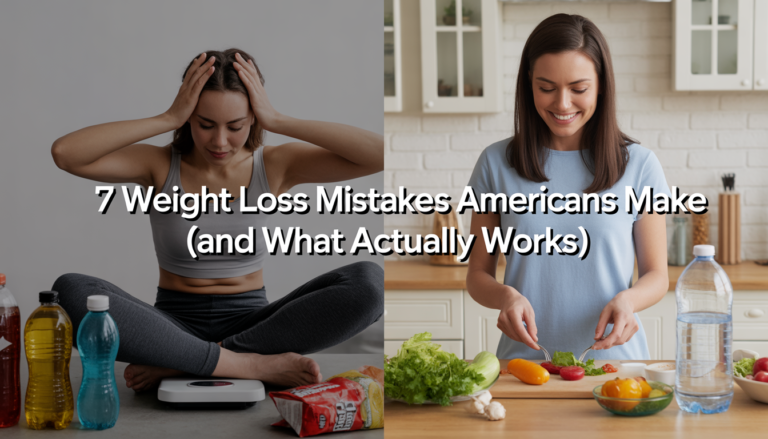
7 Common Weight Loss Mistakes Americans Make (And How to Avoid Them)
Understanding Healthy Weight Loss
What “Healthy” Truly Means
Healthy weight loss isn’t fast. It isn’t dramatic. And it certainly isn’t miserable.
It’s the gentle art of reducing body fat while preserving muscle, mental well-being, and metabolic balance. Think of it less like a sprint and more like tending a garden—steady, patient, intentional.
Why Crash Diets Fail
Extreme calorie cuts behave like fireworks: bright at first, gone in seconds. They slow metabolism, trigger cravings, and almost always lead to rebound weight gain. The body remembers deprivation—and it fights back.
The American Weight Challenge

Lifestyle Patterns in the U.S.
Sedentary Habits
Long commutes, desk jobs, streaming marathons—movement has quietly slipped out of daily life. The body, designed for motion, stiffens under stillness.
Ultra-Processed Food Culture
Fast food isn’t just convenient—it’s engineered for overconsumption. Hidden sugars, refined oils, and sodium overload quietly sabotage progress.
Nutrition Foundations for Sustainable Results

Balanced Macronutrients Explained
Proteins, Carbs, and Fats
Protein repairs and preserves muscle. Carbohydrates fuel the brain and workouts. Healthy fats stabilize hormones. Removing any of them entirely is like removing wheels from a car and expecting it to drive.
Balance is power.
Portion Control Without Starvation
You don’t need tiny plates or constant hunger. Learning portion awareness—using hands, hunger cues, and mindful pacing—creates control without obsession.
Smart Eating Habits for Daily Life
Grocery Shopping the Right Way
Shop the perimeter. Fresh produce, lean proteins, whole foods. If a label reads like a chemistry exam, it probably belongs back on the shelf.
Reading Nutrition Labels
Ignore flashy claims. Look for fiber, protein, and minimal added sugars. Ingredients are listed by quantity—what’s first matters most.
Physical Activity That Fits American Lifestyles
Cardio vs Strength Training
Cardio burns calories today. Strength training shapes metabolism for tomorrow.
Why Strength Training Matters
Muscle is metabolically active tissue. The more you have, the more energy your body burns—even while resting. Two to three sessions weekly can reshape results dramatically.
Mental Health and Weight Loss

Stress, Sleep, and Hormones
Chronic stress elevates cortisol, encouraging fat storage. Sleep deprivation disrupts hunger hormones, making cravings louder than logic.
Weight loss doesn’t fail in the gym—it fails in exhaustion.
Common Mistakes Americans Make
Over-Restriction
Eating too little backfires. The body interprets scarcity as danger, slowing progress and amplifying hunger.
Ignoring Consistency
Perfection is overrated. Consistency builds results quietly, day after day.
Creating a Long-Term Plan
Realistic Goal Setting
Aim for 1–2 pounds per week. Anything faster risks muscle loss and burnout. Sustainable change respects time.
When to Seek Professional Help
Registered dietitians, physicians, and certified trainers provide personalized guidance—especially when medical conditions or plateaus arise.
Frequently Asked Questions
1. Is healthy weight loss slow?
Yes—and that’s why it lasts.
2. Do I need to cut carbs completely?
No. Smart carbs support energy and brain function.
3. How much exercise is enough?
150 minutes weekly plus strength training is a solid baseline.
4. Are supplements necessary?
Most aren’t. Food should always come first.
5. Can I eat out and still lose weight?
Absolutely—with mindful choices and portions.
6. Why does weight fluctuate daily?
Water, sodium, hormones, and digestion all play roles.
2 Comments