Struggling with Hormonal Belly Fat? Causes, Symptoms & Proven Solutions

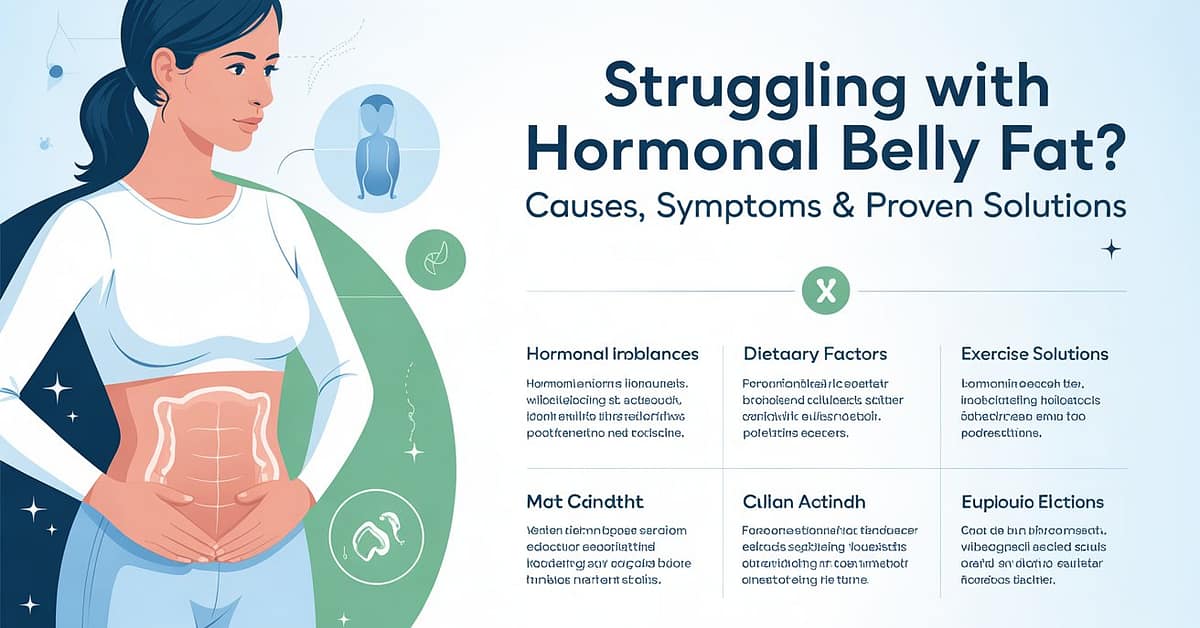
Struggling with hormonal belly fat feels different from ordinary weight gain — and most women instinctively know it. You have not changed what you eat. Your exercise routine is the same. But something around your midsection is growing, hardening, and refusing to move no matter what you try.
You cut back on carbs. Nothing. You add more cardio. Still nothing. You restrict calories until you are running on fumes — and the belly fat stays exactly where it is.
Here is what most general weight-loss advice will not tell you: when belly fat is hormonal, it does not respond to calorie math. It responds to hormone correction. The biology driving it is distinct — and so is the solution.
If you are a woman over 35 and you recognize this pattern, this guide is written for you.
Quick Answer — What Is Hormonal Belly Fat and Why Is It So Hard to Lose?
hormonal belly fat is abdominal fat accumulation driven primarily by hormonal imbalances — declining estrogen, elevated cortisol, insulin resistance, and thyroid dysfunction — rather than excess caloric intake alone. Research suggests it targets visceral fat depots surrounding the organs, making it metabolically distinct from subcutaneous fat and resistant to standard dieting. Correcting the underlying hormonal drivers through targeted nutrition, resistance training, sleep repair, and stress management may produce results where calorie restriction has failed.
👉 Is your belly fat hormonal? Find out in under 3 minutes using the Hormonal Belly Fat Risk Calculator — it identifies your specific hormonal drivers and tells you where to start.
🚀 Start Here — Before You Read Further
If you are new to understanding hormonal belly fat, begin with these tools to establish your baseline:
- Hormonal Belly Fat Risk Calculator — Identify which hormones are driving your abdominal fat
- Insulin Resistance Quiz — Check if insulin resistance is at the root of your struggle
- Cortisol Load Calculator — Measure how much your stress level is affecting fat storage
Understanding your specific hormonal pattern makes every solution in this guide more targeted and more effective.
⚡ Quick Reference Box
| Factor | Detail |
|---|---|
| Primary hormones involved | Estrogen, cortisol, insulin, thyroid hormone, progesterone |
| Who struggles most | Women 35–55 in perimenopause, high-stress phases, or post-pregnancy |
| Why dieting alone fails | Caloric restriction may raise cortisol — the primary visceral fat storage hormone |
| Key clinical threshold | Waist above 35 inches signals visceral fat accumulation risk (NIH) |
| First signs to watch | Belly fat that appears without dietary changes; intense carb cravings; afternoon energy crashes |
| Typical improvement window | 8–16 weeks of consistent hormone-targeted lifestyle change |
What Exactly Is Hormonal Belly Fat?
Not all belly fat is created equal. Standard advice treats abdominal fat as a simple energy storage problem — eat less, move more, fat disappears. But hormonal belly fat is a different biological category entirely.
Subcutaneous vs. Visceral Fat — Why the Difference Matters
Subcutaneous fat sits directly under the skin. You can pinch it. It is largely cosmetic and responds — slowly but predictably — to sustained caloric deficits and exercise.
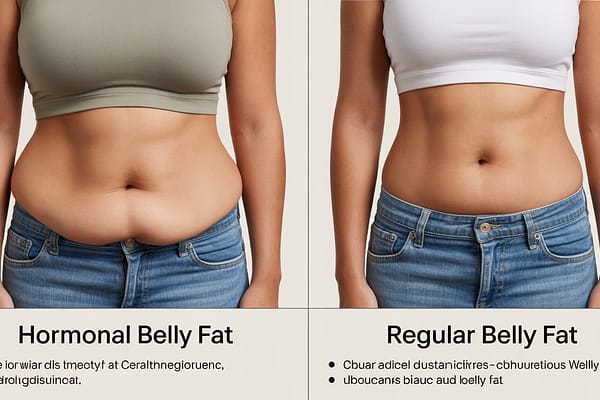
Visceral fat is what hormonal belly fat primarily involves. It accumulates deep inside the abdominal cavity, surrounding the liver, pancreas, intestines, and kidneys. You cannot pinch it. It presents as a firm, rounded abdomen — often described as feeling bloated even when you have not eaten.
Visceral fat is not passive storage. Research published in multiple journals including the International Journal of Obesity (PubMed) confirms that visceral fat actively secretes inflammatory proteins — including TNF-alpha, interleukin-6, and resistin — that worsen insulin resistance, disrupt hormonal signaling, and increase cardiovascular risk.
This is why struggling with hormonal belly fat is not just a cosmetic concern. It is a metabolic and cardiovascular health issue — and it deserves a targeted solution.
What Causes Hormonal Belly Fat?
Cause 1 — Declining Estrogen
Estrogen functions as a natural fat distribution regulator in premenopausal women. It directs fat storage toward the hips, thighs, and buttocks — away from the organs. When estrogen declines during perimenopause (which may begin as early as the late 30s), this protective direction disappears.
Fat storage migrates inward — toward visceral abdominal depots. Research published in Menopause (PMC) indicates that postmenopausal women accumulate significantly more visceral fat than premenopausal women at the same body weight and activity level. The variable that changed was estrogen alone.
Many women notice belly fat appearing or worsening in their early 40s — years before their last period — because perimenopause begins with hormonal fluctuation long before menopause officially arrives.
For the complete hormonal picture: Perimenopause Weight Gain After 40 — Why It Happens.
Cause 2 — Elevated Cortisol (The Stress-Fat Connection)
Cortisol is the body’s primary stress hormone. In short bursts, it serves important functions. Chronically elevated, it becomes one of the most direct drivers of abdominal fat storage.
Visceral fat tissue contains a high density of glucocorticoid receptors — the specific receptors that respond to cortisol. Studies suggest that cortisol binding at these receptors may increase fat cell size and accelerate fat storage specifically in abdominal depots.
A real-life example most women recognize: a prolonged high-stress period at work — six months of long hours, poor sleep, and constant pressure — often produces noticeable belly fat even without any change in diet. That is cortisol working as a fat redistribution hormone.
👉 Use the Cortisol Load Calculator to measure your personal cortisol burden and identify which daily stressors are contributing most.
The stress-water retention-belly fat link is explained in detail at: Does Stress Cause Water Retention and Weight Gain in Women?
Cause 3 — Insulin Resistance
When cells develop insulin resistance, the pancreas compensates by producing more insulin. Chronically elevated insulin is one of the body’s most potent fat-storage signals — and research suggests it directs fat preferentially toward visceral abdominal depots that remain insulin-sensitive even when muscle cells have become resistant.
Visceral fat then releases inflammatory proteins that further worsen insulin resistance — creating a cycle that deepens both the belly fat and the metabolic dysfunction driving it.
Insulin resistance is particularly common in women over 35 experiencing perimenopause, as estrogen normally supports insulin sensitivity in muscle tissue. Its decline removes a key protective factor.
Take the Insulin Resistance Quiz to identify your risk. For the complete guide: Insulin Resistance in Women — Symptoms, Causes & Reversal Guide.
Cause 4 — Thyroid Underfunction
The thyroid regulates the rate at which every cell in the body burns energy. Even subclinical hypothyroidism — thyroid function within standard lab reference ranges but operating below the woman’s individual optimum — may slow metabolism, promote fluid retention, reduce fat mobilization, and contribute to belly fat accumulation.
The American Thyroid Association estimates 1 in 8 American women develops a thyroid condition during her lifetime — making this a significant and frequently missed contributor to hormonal belly fat.
Key thyroid-related belly fat signals: fat gain alongside persistent fatigue, cold sensitivity, hair thinning, constipation, and slow recovery from exercise. Explore thyroid-specific tools at the Hormone and Thyroid Tools Hub.
Cause 5 — Progesterone Decline and Estrogen Dominance
In perimenopause, progesterone often declines faster than estrogen. This imbalance — sometimes called estrogen dominance — produces bloating, fluid retention, and abdominal weight gain even when absolute estrogen levels are falling.
This is one reason many women experience their worst belly fat symptoms in their mid-40s — a phase when estrogen is fluctuating erratically and progesterone has already significantly declined, leaving the hormonal ratio distorted.
Cause 6 — Poor Sleep
Research from the Annals of Internal Medicine (PubMed) shows that insufficient sleep elevates cortisol, suppresses growth hormone — which supports fat metabolism and muscle maintenance — and amplifies ghrelin (hunger hormone) while suppressing leptin (satiety hormone). The combined effect is a hormonal environment that maximizes fat storage and minimizes fat burning simultaneously.
Women averaging less than 6 hours of sleep nightly may face measurably higher visceral fat accumulation rates regardless of diet, per NIH data. Sleep is not a lifestyle preference when struggling with hormonal belly fat — it is a primary intervention.
Symptoms of Hormonal Belly Fat — Do You Recognize These?
Hormonal belly fat presents as a pattern of symptoms — not just a number on the scale. Recognizing the full picture helps identify the hormonal root cause:
Physical Symptoms
- Abdominal fat that feels firm, not soft — visceral fat presents differently than subcutaneous fat
- Belly expansion without weight changes across the rest of the body
- Waist circumference above 35 inches — the NIH clinical threshold for visceral fat risk
- Bloating that worsens in the second half of your cycle — progesterone and fluid retention pattern
- Skin tags on the neck, armpits, or chest — a visible marker of chronically elevated insulin
- Dark skin patches on the neck or groin (acanthosis nigricans) — a direct insulin resistance indicator
Metabolic and Energy Symptoms
- Intense carbohydrate and sugar cravings, especially between 3–6 PM
- Energy crashes 1–2 hours after eating — classic post-meal insulin spike and crash pattern
- Difficulty losing weight despite genuine dietary effort and consistent exercise
- Weight loss plateau that appeared after initial progress and refuses to break
Hormonal and Mood Symptoms
- Worsening PMS or new mood changes around the menstrual cycle
- Irregular cycles beginning in the early-to-mid 40s
- Sleep that is non-restorative despite adequate hours
- Anxiety or low mood that feels hormonal — shifting with the cycle rather than circumstance
For the complete symptom breakdown by hormonal driver: Hormonal Belly Fat Symptoms in Women — Root Cause Guide.
What Is Happening in Your Body — The Science Made Simple
Imagine your hormonal system as a traffic control network. Hormones are the signals that direct where energy goes — whether it gets burned as fuel or stored as fat, and where that fat gets deposited.
In healthy hormonal balance, this traffic flows smoothly:
- Estrogen routes fat away from organs, toward peripheral storage
- Cortisol provides short bursts of energy mobilization and then recedes
- Insulin efficiently clears blood glucose into muscle cells for fuel
- Thyroid hormone maintains a steady metabolic burn rate
When struggling with hormonal belly fat, research suggests this traffic network develops three simultaneous failures:
Signal failure 1 — Estrogen withdrawal: The routing instruction to keep fat away from organs disappears. Abdominal fat depots open up to receive storage that was previously redirected elsewhere.
Signal failure 2 — Cortisol overactivation: Chronic stress keeps cortisol elevated around the clock. Glucocorticoid receptors in visceral fat respond by enlarging fat cells and recruiting more fat into abdominal storage — independently of caloric intake.
Signal failure 3 — Insulin misdirection: Insulin-resistant muscle cells reject glucose. That glucose re-routes to visceral fat cells, which remain insulin-sensitive and actively pull in the excess — converting it to stored fat rather than muscle fuel.
Standard dieting addresses none of these three failures. Eating less may actually worsen Signal 2 — caloric restriction raises cortisol — which is why aggressive dieting often makes hormonal belly fat worse or simply produces no result.
The solution must address the signals, not just the calories.
To understand how each of these hormones affects your overall metabolic rate: How Hormones Affect Metabolism — The Complete Guide for Women Over 35.
Proven Solutions — How to Address Each Hormonal Driver
Solution 1 — Resistance Training to Restore Insulin Sensitivity
Skeletal muscle is the body’s primary glucose disposal system. Building muscle through resistance training restores insulin sensitivity — redirecting glucose away from visceral fat and back into muscle cells where it belongs.
Research published in Diabetes Care (PubMed) confirmed that resistance training may restore insulin-stimulated glucose disposal by up to 46% in sedentary adults over 16 weeks. This is not modest — it is a fundamental metabolic correction.
What this looks like practically:
- 3–4 sessions per week of progressive resistance training
- Compound movements: squats, deadlifts, rows, hip hinges, presses
- Progressive overload — gradually increasing resistance over time
- 48-hour recovery between sessions targeting the same muscle groups
For the optimal exercise approach for women over 35: Best Exercises to Boost Metabolism in Perimenopausal Women.
Solution 2 — Targeted Nutrition to Lower Insulin and Support Estrogen
Lower insulin through food choices:
- Replace refined carbohydrates with high-fiber alternatives
- Eat protein first at every meal — research suggests this may reduce post-meal glucose by 28–37%
- Target 25–35 grams of protein per meal to blunt insulin spikes and support muscle maintenance
- Add 1–2 tablespoons of apple cider vinegar before carbohydrate-heavy meals — acetic acid may slow starch digestion measurably
Support estrogen metabolism through cruciferous vegetables: Broccoli, Brussels sprouts, and cauliflower contain indole-3-carbinol (I3C), a compound that research suggests may support liver detoxification of estrogen metabolites — reducing the recirculation pattern that worsens estrogen dominance symptoms.
👉 Use the Macro Split Calculator to find the right carbohydrate, protein, and fat balance for your hormonal goals.
For the complete dietary strategy: Best Diet for Hormonal Belly Fat — Foods, Meal Plan & Root Cause Strategy.
Solution 3 — Cortisol Reduction as a Non-Negotiable Daily Practice
Because cortisol directly activates visceral fat storage receptors, no amount of dietary improvement fully compensates for chronically elevated cortisol. Cortisol reduction must be a daily deliberate practice — not an occasional effort.
Evidence-supported daily cortisol management:
- Morning outdoor walk (20–30 minutes): Natural morning light calibrates the cortisol awakening response — helping it peak appropriately in the morning and decline through the day, rather than staying flat and elevated
- Slow diaphragmatic breathing (10 minutes daily): Multiple published trials show this may reduce salivary cortisol by a measurable margin within a single session; cumulative effects develop over weeks
- Caffeine cutoff at noon: Afternoon caffeine may blunt the natural cortisol decline cycle, keeping levels elevated into the evening
- Firm wind-down routine (90 minutes before bed): Transitioning from stimulating to calming activities in the evening supports the overnight cortisol nadir — the period when visceral fat mobilization is highest
Solution 4 — Sleep Repair as a Primary Fat-Loss Tool
Consider sleep the hormonal reset that cannot be replaced by any supplement, dietary strategy, or exercise protocol.
During deep sleep, cortisol drops to its 24-hour minimum, growth hormone peaks (supporting fat metabolism and muscle maintenance), and insulin sensitivity is restored at the cellular level. Shortchanging this window interrupts all three processes simultaneously.
Practical sleep optimization steps:
- Set a consistent bedtime and wake time — including weekends
- Keep the bedroom at 65–68°F (the research-supported temperature range for deep sleep)
- Eliminate blue light exposure 60 minutes before bed
- Avoid alcohol within 3 hours of sleep — alcohol fragments sleep architecture and suppresses REM stages even at moderate doses
👉 Identify your specific sleep weaknesses using the Sleep Quality Score Tool — then address the highest-impact factor first.
The connection between sleep disruption, weight gain, and hormonal belly fat is covered in: Morning Habits That Kill Your Metabolic Rate.
Solution 5 — Cycle-Sync Nutrition and Exercise
Women who eat and train the same way every day throughout their cycle may be working against their own hormonal patterns without realizing it.
A practical framework:
| Cycle Phase | Days | Key Strategy |
|---|---|---|
| Menstrual | 1–5 | Lower intensity training; prioritize iron-rich foods; slightly higher caloric intake acceptable |
| Follicular | 6–13 | Insulin sensitivity highest — tolerate higher carbohydrates; ideal for strength gains |
| Ovulatory | 14–16 | Peak energy and performance — highest intensity workouts |
| Luteal | 17–28 | Lower insulin sensitivity — reduce refined carbs; increase protein and healthy fat; allow 100–150 extra calories in late luteal |
👉 The Cycle-Synced TDEE Calculator automates this calculation — generating phase-specific daily calorie and macronutrient targets that adjust as your cycle progresses.
For the complete nutrition strategy across cycle phases: Calorie Needs During Menstrual Cycle Phases.
Solution 6 — Strategic Caloric Positioning (Not Restriction)
The goal is not to eat as little as possible. The goal is to eat the right amount at the right times to support hormonal recovery, muscle maintenance, and fat metabolism.
A productive deficit is 300–500 calories below TDEE. Larger deficits may raise cortisol, break down muscle, and slow metabolism — three outcomes that worsen hormonal belly fat.
👉 Find your exact caloric baseline using the TDEE Calculator and set a deficit that supports fat loss without triggering the cortisol response that undermines it. Then use the Weight Loss Predictor Calculator to set realistic timeline expectations.
Best Foods for Hormonal Belly Fat
These foods address the specific mechanisms driving visceral abdominal fat in women over 35:
For insulin sensitivity:
- Berries (blueberries, raspberries) — polyphenols may improve insulin receptor function
- Lentils and chickpeas — high fiber + protein; very low glycemic index
- Leafy greens — magnesium content supports insulin receptor activation
- Apple cider vinegar (1–2 tbsp before meals) — acetic acid may slow glucose absorption
For estrogen metabolism:
- Broccoli, cauliflower, Brussels sprouts — I3C and DIM support liver estrogen clearance
- Ground flaxseed — lignans may support healthy estrogen metabolism
- High-fiber foods generally — fiber binds estrogen metabolites in the gut, reducing reabsorption
For cortisol and stress:
- Fatty fish (salmon, sardines, mackerel) — omega-3s may reduce cortisol reactivity and systemic inflammation
- Dark chocolate (70%+ cocoa) — flavonoids linked to cortisol reduction in clinical trials
- Avocados — healthy fats and magnesium support adrenal function
For thyroid and metabolism:
- Brazil nuts (1–2 daily) — selenium supports T4-to-T3 thyroid hormone conversion
- Eggs — complete protein with iodine for thyroid hormone synthesis
- Plain Greek yogurt — whey protein activates GLP-1; probiotics support the gut-metabolic axis
For the full food strategy: 17 Foods That Boost Metabolism in Women Over 35.
Foods That Make Hormonal Belly Fat Worse
| Food Category | Why It Worsens the Problem |
|---|---|
| Refined carbohydrates | Rapid insulin spikes route glucose directly to visceral fat |
| Sugary drinks and juice | Liquid fructose bypasses satiety signals; immediate insulin surge |
| Alcohol | Suppresses fat oxidation for hours; elevates cortisol; impairs liver estrogen clearance |
| Ultra-processed snacks | Promote systemic inflammation that worsens insulin resistance |
| High-sodium processed foods | Trigger aldosterone-driven water retention that compounds abdominal distension |
| Sweetened flavored yogurt | Often contains 20+ grams of added sugar — marketed as healthy |
Lifestyle Changes That Produce the Biggest Results
Beyond diet and exercise, three lifestyle factors carry outsized influence on hormonal belly fat specifically:
Water intake. Research suggests adequate hydration supports fat metabolism at the biochemical level — fat oxidation requires water as a reactant in the hydrolysis step. Dehydration also elevates cortisol, which worsens visceral fat storage. Use the Water Intake Calculator for a personalized daily target.
Morning routine structure. The first 60–90 minutes after waking sets the cortisol and insulin patterns for the entire day. Research suggests morning light exposure, a protein-rich breakfast, and light movement collectively calibrate the cortisol awakening response — keeping cortisol appropriately high in the morning and declining by afternoon, rather than staying chronically flat and elevated.
Evening eating patterns. Finishing the last meal 3–4 hours before bed allows insulin to clear before sleep. Overnight low-insulin states are when growth hormone is most active and fat mobilization is highest. Late-night eating compresses this metabolic window.
Common Mistakes Women Make When Struggling with Hormonal Belly Fat
❌ Eating less and exercising more at the same time Simultaneously reducing calories significantly and increasing exercise volume raises cortisol from both directions. This is the most common mistake — and it may actively worsen hormonal belly fat through cortisol-driven visceral fat deposition.
❌ Relying only on the scale Hormonal belly fat correction involves water redistribution, muscle gain, and visceral fat reduction — all of which may not be reflected accurately by scale weight week to week. Waist circumference measurement, how clothing fits, and energy levels are more reliable early indicators of hormonal improvement.
❌ Treating it like a short-term diet Hormonal belly fat accumulated over months or years of hormonal shifting. Reversing it requires weeks to months of consistent hormonal-targeted behavior. Women who commit to 4–6 weeks and then evaluate results are abandoning the process before the biological timeframe has elapsed.
❌ Ignoring the hormonal cycle Eating the same way and training the same way every day ignores the hormonal reality that shifts weekly. Women who cycle-sync their nutrition and training may produce meaningfully better outcomes with the same total caloric intake and exercise volume.
❌ Focusing on ab exercises for spot reduction Crunches and planks build abdominal muscle but do not reduce visceral fat locally. Visceral fat responds to systemic hormonal correction — not local exercise. Resistance training of the full body produces far greater hormonal benefit than abdominal-specific exercise.
Key Takeaways
- Hormonal belly fat is primarily driven by estrogen decline, elevated cortisol, insulin resistance, thyroid changes, and progesterone imbalance — not simply excess caloric intake
- Visceral fat actively secretes inflammatory proteins that worsen each hormonal driver — creating a self-reinforcing accumulation cycle
- Research suggests caloric restriction alone may be insufficient and can raise cortisol — directly worsening the primary visceral fat storage mechanism
- Resistance training may restore insulin-stimulated glucose disposal by up to 46% — making it the most targeted exercise intervention for hormonal belly fat
- Sleep quality determines whether a caloric deficit produces fat loss or muscle loss — it is not separate from the plan
- Cycle-syncing nutrition and exercise to hormonal phases may produce better outcomes than fixed daily approaches
- The solution targets hormonal signals — not just calories — because hormonal signals are what drove the fat there in the first place
Frequently Asked Questions
Why do I have belly fat when I eat healthy and exercise regularly? This is the defining feature of hormonal belly fat — it is driven by hormonal signals, not caloric imbalance alone. Two women eating identical diets with different cortisol levels, estrogen profiles, and insulin sensitivity produce different fat distribution outcomes. If your belly fat persists despite genuine dietary improvement and consistent exercise, the cause is almost certainly hormonal. Start with the Hormonal Belly Fat Risk Calculator to identify your specific driver.
At what age does hormonal belly fat typically begin? For most American women, noticeable hormonal belly fat begins appearing in the late 30s to mid-40s — corresponding with the earliest stages of perimenopause, when estrogen begins fluctuating and progesterone starts declining. However, high chronic stress (which elevates cortisol at any age) and insulin resistance can drive hormonal belly fat in women in their late 20s and 30s as well. Age is a risk factor, not a requirement.
Does menopause make hormonal belly fat permanent? No — though it does make the hormonal environment for visceral fat accumulation more persistent. Postmenopausal women who implement resistance training, optimize protein intake, manage cortisol, and correct insulin sensitivity have demonstrated measurable visceral fat reduction at any age in published research. The hormonal environment is more challenging after menopause, but the biological mechanisms for fat mobilization still operate and respond to targeted intervention.
How is hormonal belly fat different from bloating? Bloating is temporary abdominal distension — gas, fluid, or digestive content — that fluctuates hourly and daily. It typically resolves overnight. Hormonal belly fat is structural adipose tissue that accumulated over months — it does not vary significantly day to day, and it does not resolve without sustained lifestyle intervention. Many women experience both simultaneously: visceral fat as the persistent base, with cyclical bloating layered on top. The two require different solutions.
Can hormone testing confirm hormonal belly fat? Blood testing cannot directly identify hormonal belly fat, but it can identify the hormonal imbalances driving it. A comprehensive panel including fasting insulin, HOMA-IR, full thyroid markers (TSH, free T3, free T4), estrogen, progesterone, and cortisol provides the clearest picture of which hormonal drivers are most active. This information makes the lifestyle intervention far more targeted. Discuss this panel with your healthcare provider — standard annual panels frequently miss the most relevant markers.
Does the type of exercise matter for hormonal belly fat? Significantly. Research consistently shows that resistance training produces greater visceral fat reduction than cardio alone — because resistance training builds metabolically active muscle tissue that restores insulin sensitivity, raises resting metabolic rate, and supports estrogen metabolism. Cardio is beneficial but should complement, not replace, resistance training when hormonal belly fat is the primary concern. Walking specifically — particularly after meals — also produces measurable post-meal glucose reduction that targets the insulin resistance mechanism directly.
Can I use intermittent fasting for hormonal belly fat? Possibly — with important caveats for women over 35. A 10–12 hour overnight fast (for example, finishing dinner by 7 PM and eating breakfast by 7 AM) allows insulin to clear overnight and supports the fat mobilization window when growth hormone is active. More aggressive fasting windows (below 8 hours of eating) may raise cortisol in some women and worsen rather than improve hormonal belly fat. Start conservatively and adjust based on energy, sleep quality, and waist circumference trend over 4–6 weeks. Use the Intermittent Fasting Calculator to find the window that fits your schedule without adding cortisol stress.
Conclusion
Struggling with hormonal belly fat is not a character flaw or a willpower problem — it is a biological challenge with a biological solution. The fat did not arrive because you stopped trying. It arrived because your hormonal environment changed in ways that standard dieting and general exercise advice was never designed to address.
The path forward is clear, even if it takes time: build muscle to restore insulin sensitivity, reduce refined carbohydrates to lower insulin, manage cortisol daily and deliberately, repair sleep as a non-negotiable metabolic foundation, and sync your nutrition to your hormonal cycle rather than fighting it.
These are not quick fixes. They are the strategies that address the actual drivers — and that is exactly why they produce results where everything else has not.
👉 Take your next step now:
- Hormonal Belly Fat Risk Calculator — Find out which hormone is your primary driver
- TDEE Calculator — Set a calorie target that supports fat loss without raising cortisol
- Cycle-Synced TDEE Calculator — Sync your nutrition to your hormonal phase
- Insulin Resistance Quiz — Determine if insulin is the core issue to address first
- Sleep Quality Score Tool — Fix the foundation everything else depends on
You have been struggling because the strategy did not match the problem. Now you have both the explanation and the roadmap.
⚠️ Medical Disclaimer: This article is for informational and educational purposes only. It does not constitute medical advice, diagnosis, or treatment. Always consult a qualified healthcare provider before making changes to your diet, exercise routine, or supplement regimen — especially if you have an existing health condition, are taking medication, or are experiencing significant hormonal changes.
Medical References
- Visceral Fat & Inflammatory Proteins — pubmed.ncbi.nlm.nih.gov/21804427
- Estrogen Decline & Visceral Fat — pmc.ncbi.nlm.nih.gov/articles/PMC3940400
- Resistance Training & Insulin Sensitivity — pubmed.ncbi.nlm.nih.gov/10480510
- Sleep & Hormonal Fat Accumulation — pubmed.ncbi.nlm.nih.gov/10543671
- NIH — Visceral Obesity & Metabolic Risk — nhlbi.nih.gov/health/educational/lose_wt/risk.htm
- CDC — Women & Metabolic Syndrome Data — cdc.gov/nchs/data/hus

[…] 👉 Related: Strength Training for Women Over 40 — How to Build Muscle Without Wrecking Your Hormones […]